












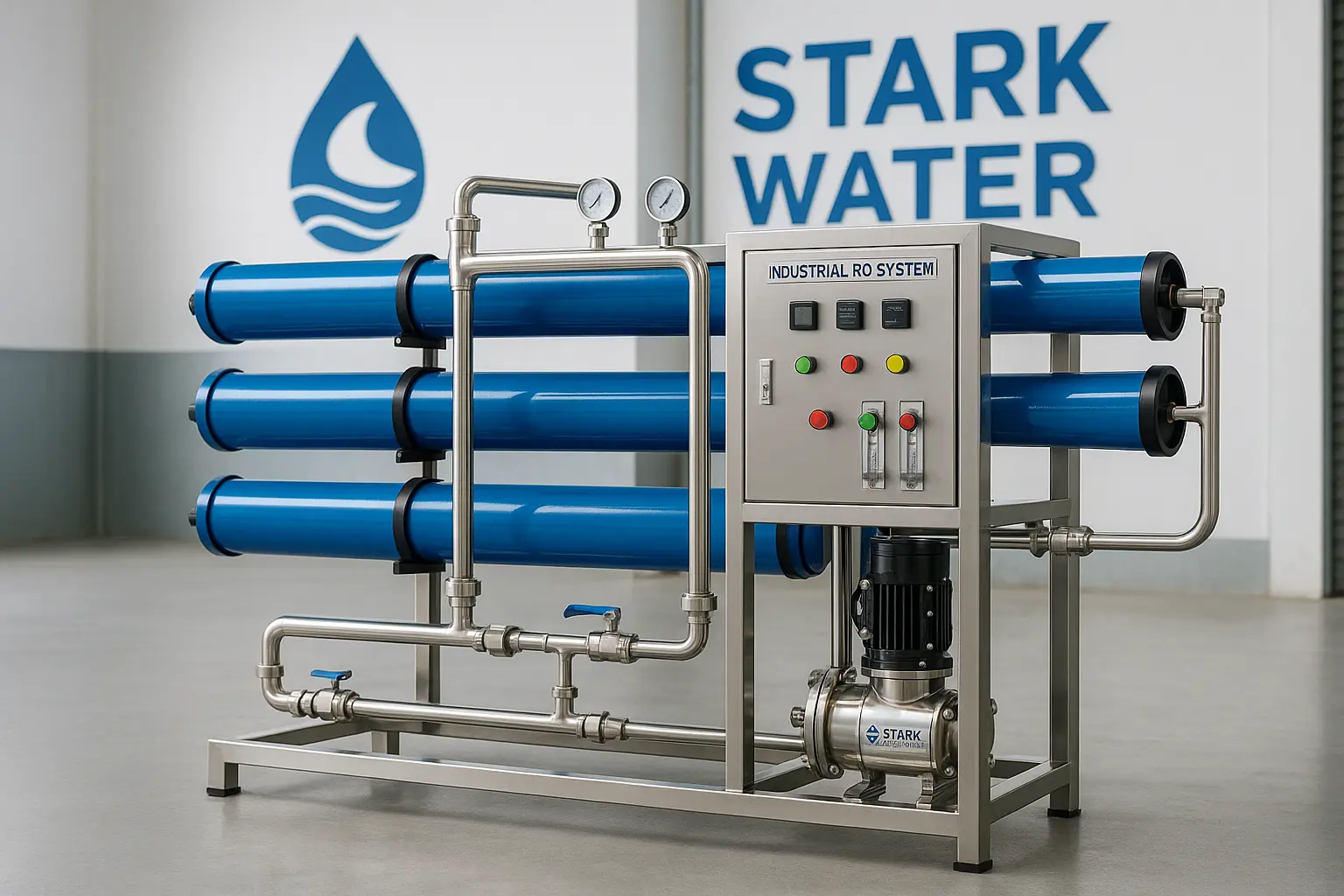
Effective Industrial RO maintenance is the single most critical factor in minimizing operational expenditure (OPEX) for water treatment plants. For facility managers, neglecting these protocols leads not only to expensive membrane fouling but also to increased energy consumption and unplanned production downtime.
At Stark Water, we believe that a preventative Industrial RO maintenance strategy is superior to reactive repairs. This technical guide outlines the rigorous protocols required to keep your Reverse Osmosis (Wikipedia) system running at peak efficiency.
Why Industrial RO Maintenance is Critical
Many operators make the mistake of relying solely on raw operational data. However, true Industrial RO maintenance requires understanding the subtle signs of system degradation. Without a consistent schedule, your plant faces three primary risks:
- Irreversible Fouling: Once membranes scale beyond a certain point, cleaning becomes ineffective, forcing expensive replacements.
- Energy Penalties: Fouled membranes require significantly higher feed pressure to produce the same amount of water, driving up electricity bills.
- Water Quality Drift: As salt rejection rates drop, product water conductivity spikes, potentially compromising your downstream manufacturing process.
Is Your System Inefficient?
If your equipment is over 5 years old and fails despite regular Industrial RO maintenance, upgrading to a modern system can reduce energy usage by up to 30%.
View Industrial RO Systems (500LPH – 50TPH)
The Role of Data Normalization in Industrial RO Maintenance
A common pitfall in Industrial RO maintenance is reacting to raw flow data without accounting for temperature. RO membrane performance changes by approximately 3% for every degree Celsius of water temperature change.
To perform accurate Industrial RO maintenance, you must normalize your data according to standards like ASTM D4516. You should log the following daily:
- Normalized Permeate Flow: Indicates the true production capacity.
- Normalized Salt Passage: Indicates the true rejection rate.
- Differential Pressure (Delta P): The pressure drop between feed and concentrate.
Daily and Weekly Industrial RO Maintenance Checklist
To ensure your system’s longevity, your Industrial RO maintenance log must include specific checkpoints. This routine prevents minor issues from becoming catastrophic failures.
Daily Checks
- Monitor Pressure Drops: A 10-15% increase in Delta P across a stage indicates immediate fouling.
- Check Flow Rates: Record Permeate and Concentrate flow. Ensure the recovery rate matches the design specification.
- Chemical Dosing verification: Ensure anti-scalant and SMBS tanks are full and pumps are primed.
Weekly Checks
- System Calibration: Verify online pH and conductivity sensors against a handheld meter.
- Leak Inspection: Check high-pressure piping and pump seals for drips.
- Pre-treatment Verification: Check the pressure drop across the 5-micron cartridge filters.
CIP Protocols for Industrial RO Maintenance
Cleaning-In-Place (CIP) is a cornerstone of effective Industrial RO maintenance. Knowing when to clean is just as important as knowing how to clean.
The 4-Step Cleaning Process
- Mix: Prepare the cleaning solution at the recommended pH and temperature (usually < 45°C).
- Recycle: Circulate the solution at low pressure for 20-30 minutes.
- Soak: Allow the membranes to soak in the solution (1-12 hours depending on fouling).
- Flush: Flush the system with high-quality permeate water to remove chemical residues.
| Foulant Type | Maintenance Action | Chemical |
|---|---|---|
| Inorganic Scale (Calcium Carbonate) | Low pH Cleaning (pH 2-3) | Citric Acid / HCL |
| Biofouling (Organics, Slime) | High pH Cleaning (pH 10-11) | NaOH / Alkaline Cleaners |
Spare Parts for Industrial RO Maintenance
We supply factory-direct consumables to support your Industrial RO maintenance program, including 4040/8040 membranes, housings, and high-pressure pumps.
Get a Quote for RO Spare Parts
Membrane Storage and Preservation
Proper storage is an often overlooked aspect of Industrial RO maintenance. If your system needs to be shut down for more than 48 hours, you must take steps to prevent microbial growth.
For shutdowns lasting longer than a week, standard Industrial RO maintenance procedures require preserving the membranes in a 1.0% Sodium Bisulfite (SMBS) solution. This prevents bacteria from colonizing the membrane surface, which can lead to irreversible biofouling. Always ensure the preservation solution is flushed thoroughly before restarting the unit.
Troubleshooting Common Issues
Advanced Industrial RO maintenance involves diagnosing problems before they stop production. Here are common scenarios faced by plant engineers:
- High Conductivity: Often caused by damaged O-rings on the membrane inter-connectors or oxidation from chlorine attack. Probe testing is recommended.
- Low Permeate Flow: Usually indicates fouling. Check if pre-treatment backwashing is functioning correctly. Cold feed water can also cause this issue.
- High Pump Pressure: Inspect 5-micron cartridge filters. Replacing them is the simplest and most cost-effective form of Industrial RO maintenance.
結論
Prioritizing Industrial RO maintenance saves money and ensures continuous production quality. Whether you need technical advice, spare parts, or a complete system upgrade, Stark Water is your partner in professional water treatment.
Don’t wait for a critical breakdown. Start your routine Industrial RO maintenance plan today to protect your investment.
Contact Stark Water Engineering:
Email: stark@stark-water.com
WhatsApp: +86-18520151000